Southern SLF logo, featuring a boot about to stomp a spotted lanternfly.

Southern Spotted Lanternfly Working Group

What is SLF?

Spotted Lanternflies (SLF) are a type of planthopping insect, newly invasive to the U.S. Southeast. 

In large numbers, SLF can cause significant damage to plants. It’s important to note that SLF does not cause harm to humans and will not bite!

Read on to learn about SLF life stages.

Egg Masses

Nymph

Adult

About SLF

These insects feed on the sap of trees via piercing sucking mouthparts. They are known to feed on over 103 types of plants, preferring the following:

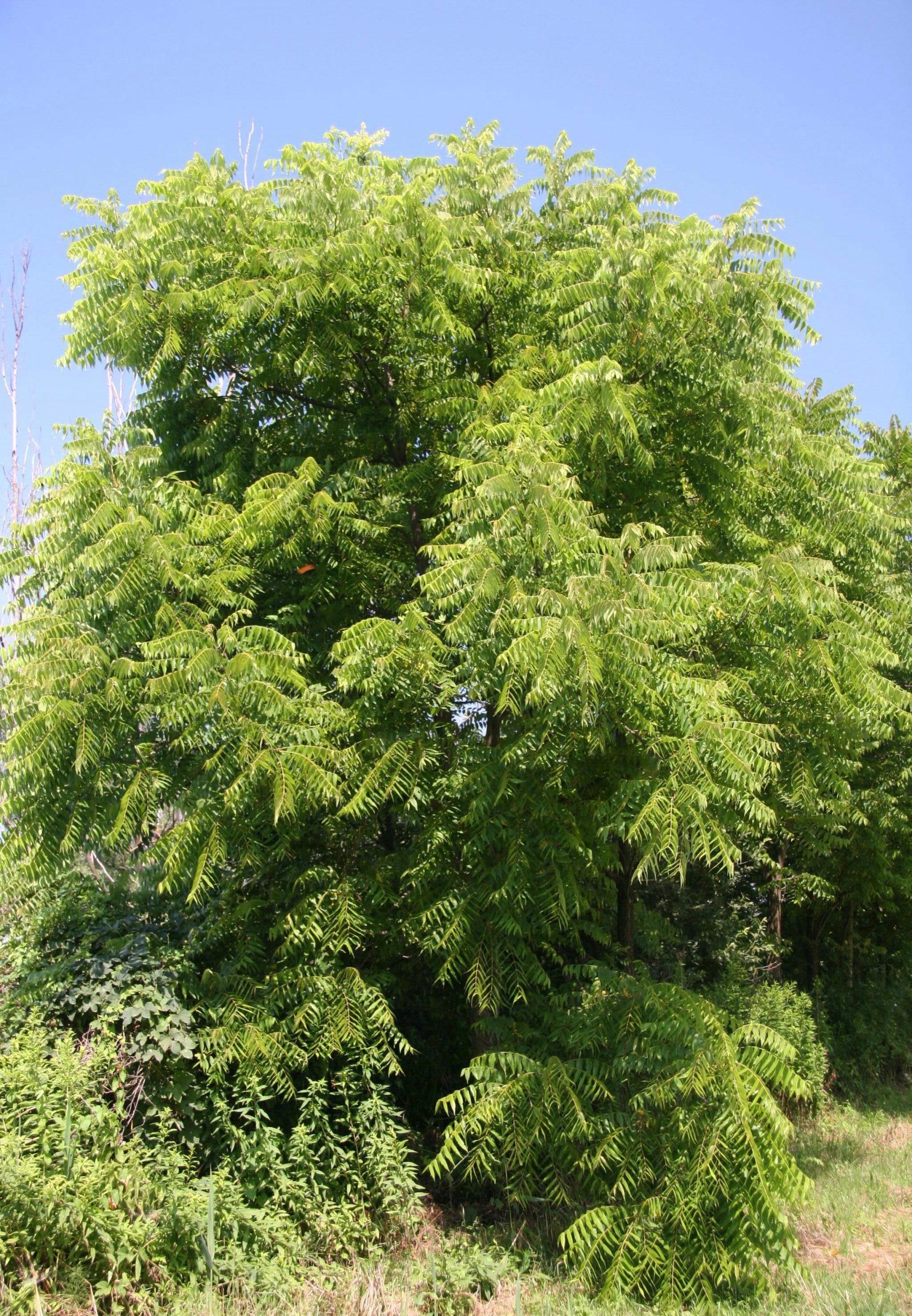
Tree of Heaven, Black Walnut, Birch, Silver Maple, Willow, Grape, and more. 

Life Stages

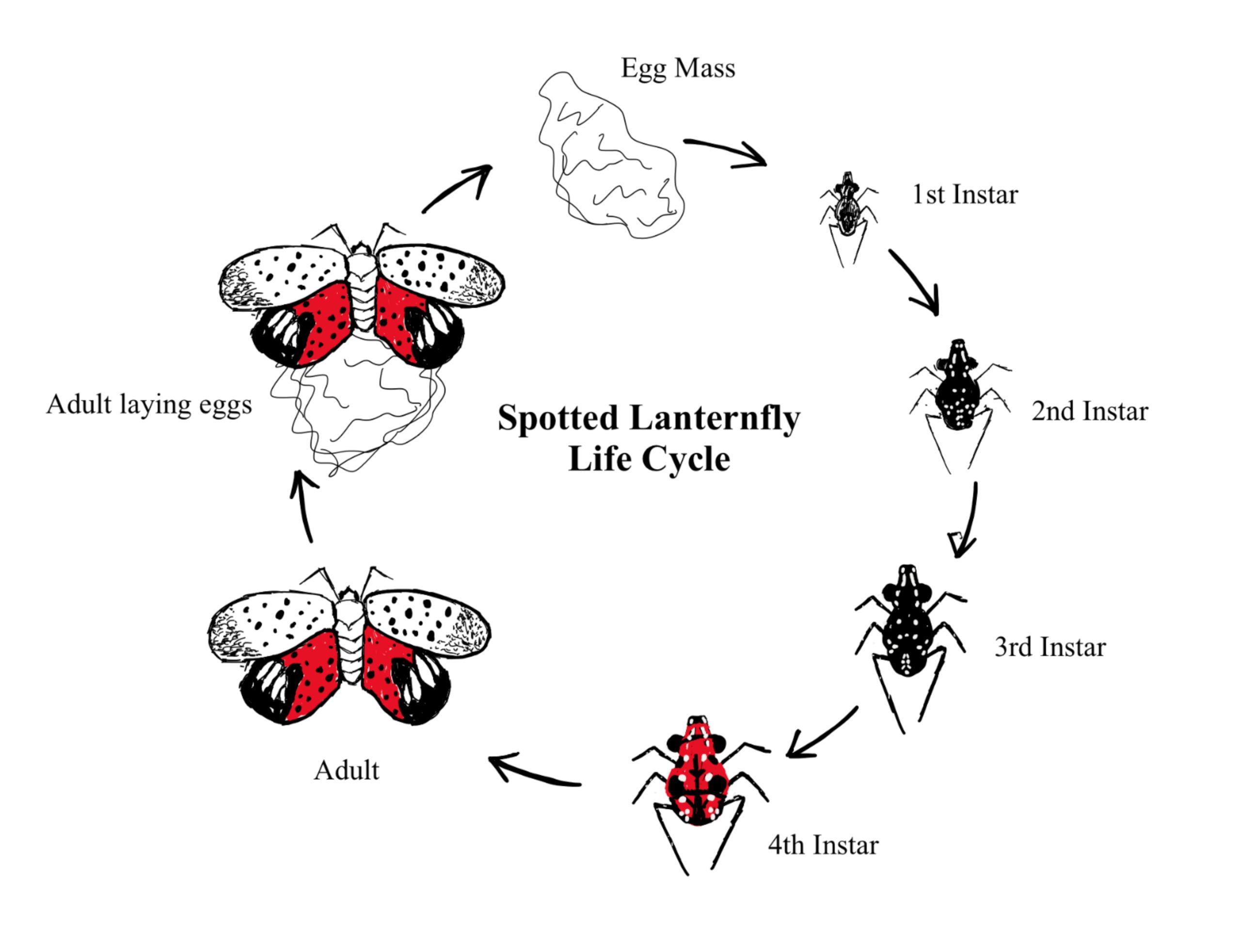
Life cycle graphic of spotted lanterflies. The first three instars are increasingly large black nymphs with white spots and six legs. The fourth instar is primarily red with black and white spots. The adult is a different, winged shape and has red underwings. The next graphic in the cycle is an adult laying eggs and then an egg mass, which turns into a first instar.
Spotted Lanternfly Life Cycle Graphic, Rebekka Horn, University of Tennessee

See Me? Stomp Me!

Step 1: Photograph

Take a photo of the SLF, be it an egg mass, nymph, or adult.

Step 2: Smash!

Smash the insects or egg masses.

Step 3: Report

Step 1: Photograph

Take a photo of the SLF, be it an egg mass, nymph, or adult.

Step 2: Smash!

Smash the insects or egg masses.

Step 3: Report

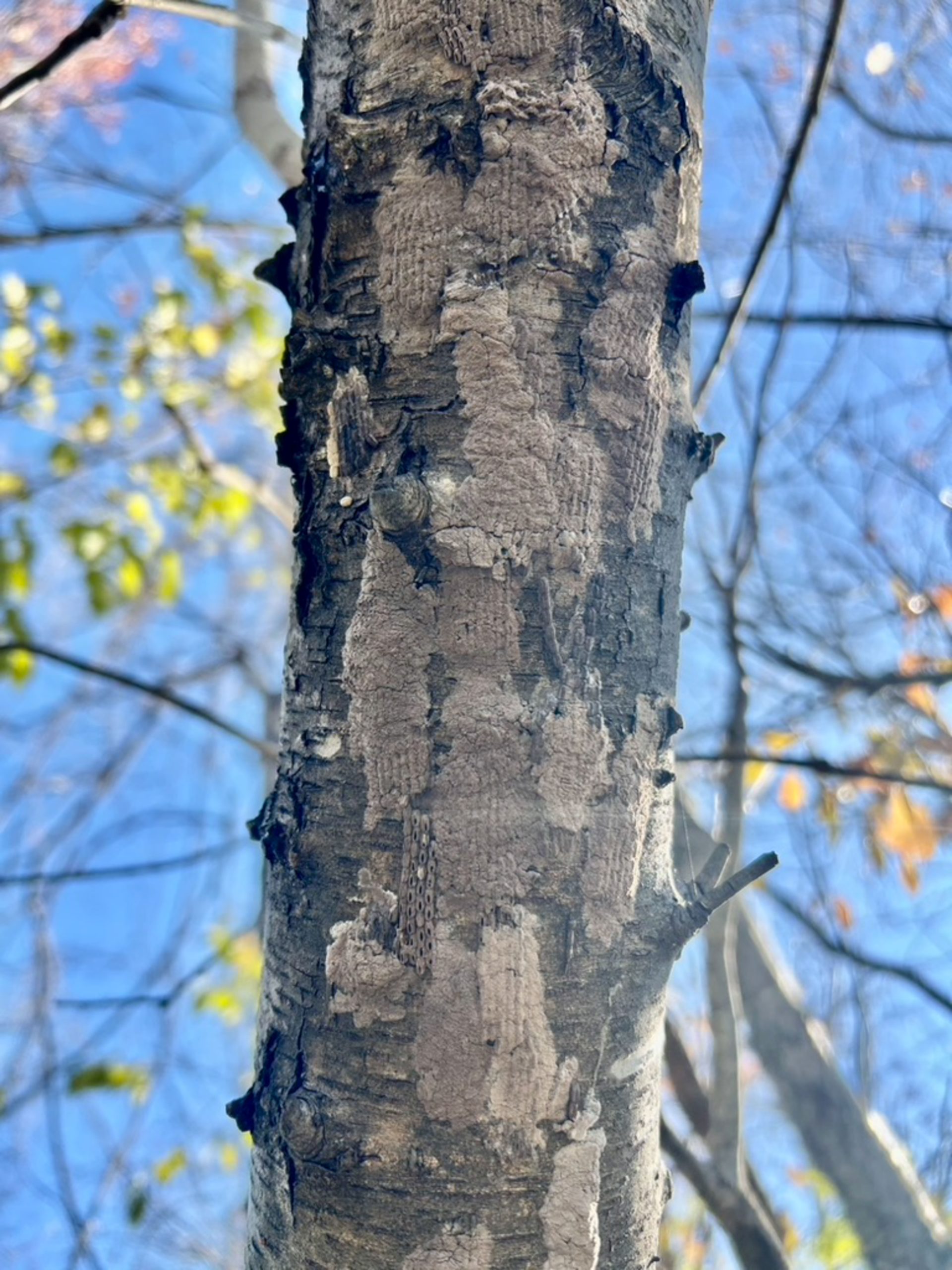
Egg Masses

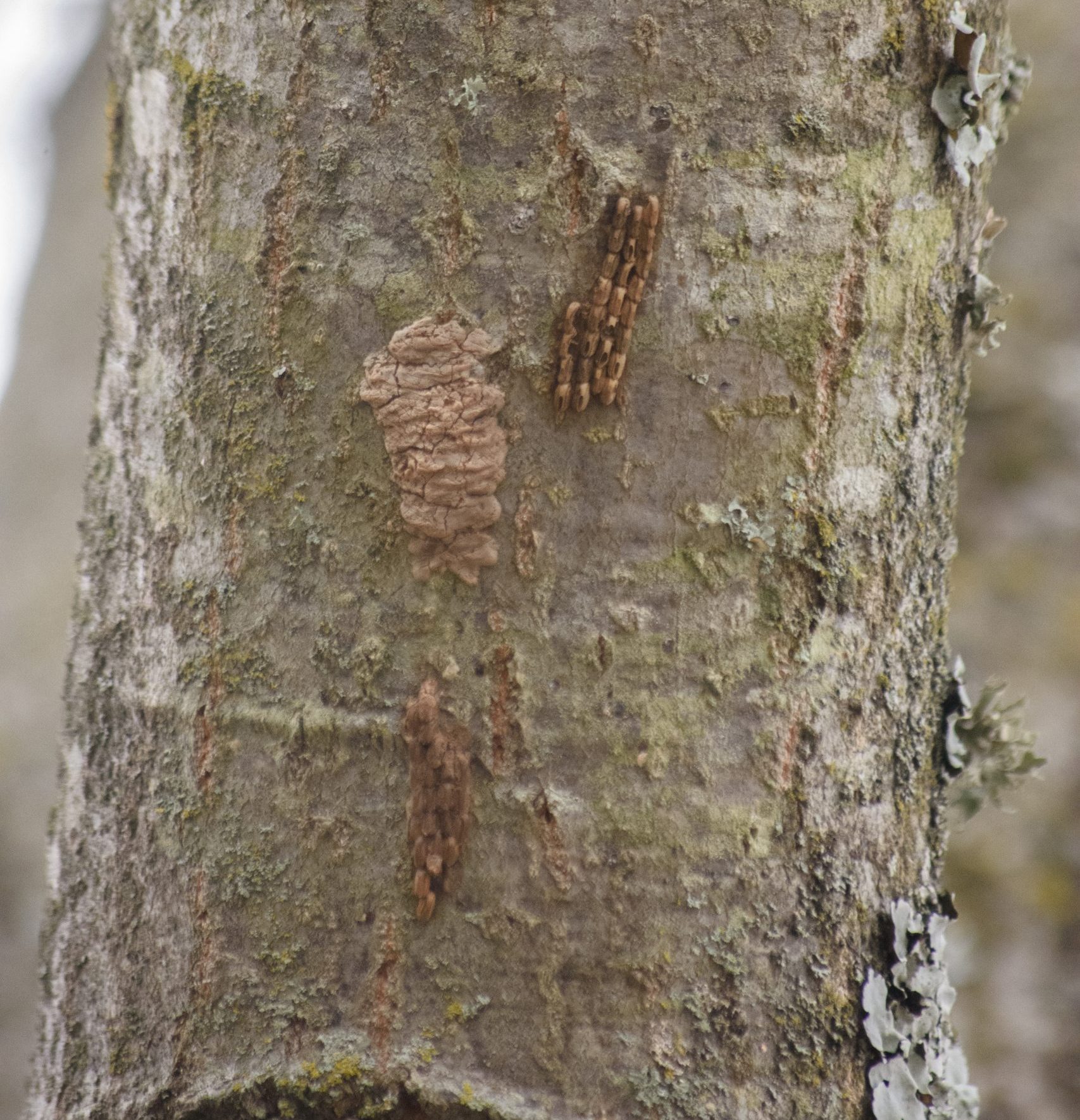
Spotted lanternfly egg masses on a tree trunk.
Spotted lanternfly egg masses, Rebekka Horn, University of Tennessee
Spotted lanternfly egg masses

SLF lay eggs on multiple surfaces: outdoor furniture, rooftops, electrical poles, cars, plants, tree bark, and more.

Egg masses take on the appearance of a mud patch and are grayish brown in color; seen above. This waxy coating over the egg mass protects them through the harsh winter months. The waxy coating cracks as it ages, and can expose the egg masses.

Nymphs

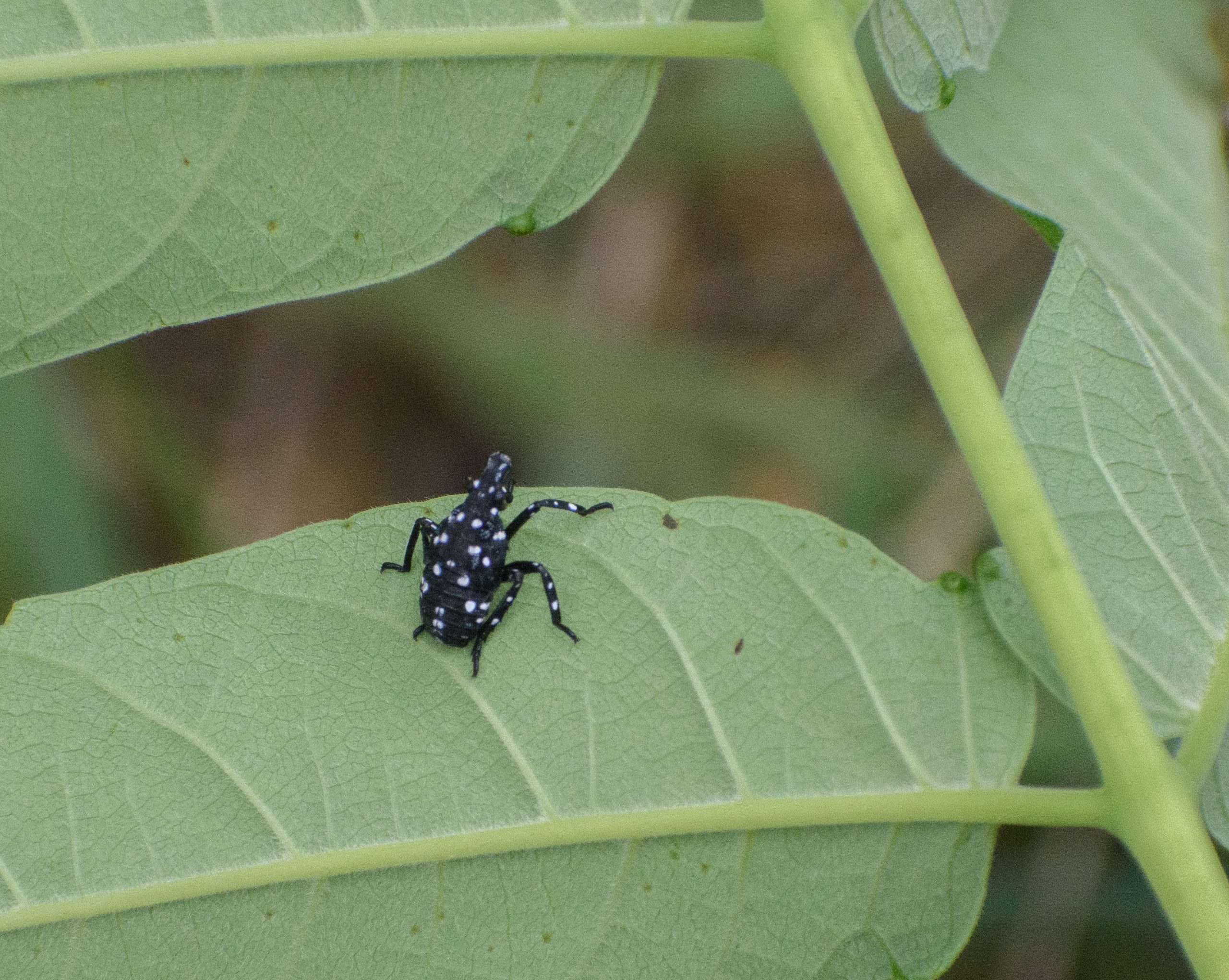
Spotted lanternfly nymph on a leaf.
Spotted lanternfly nymph, Rebekka Horn, University of Tennessee
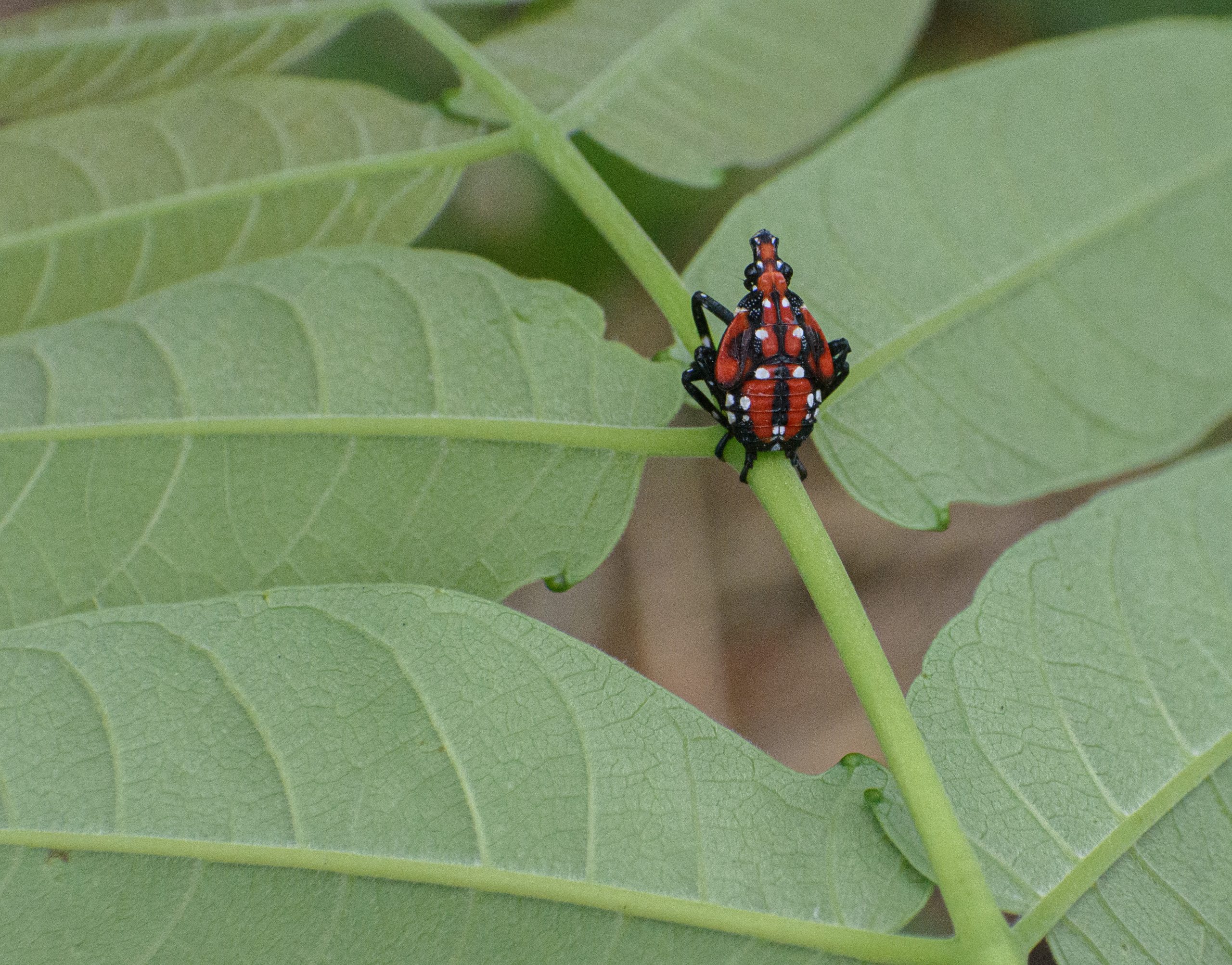
Fourth instar spotted lanternfly nymph, as evidenced by its red color.
Spotted lanternfly nymph - fourth instar, Rebekka Horn, University of Tennessee

Nymphs hatch in early spring between March and April. 1st, 2nd, and 3rd instar nymphs are black with white spots, often mistaken for ticks.

Fourth instar nymphs are more noticeable due to their red coloration and black/white spots. Fourth instar nymphs indicate that adults will hatch soon, and are seen in late summer between August and early October.

Adults

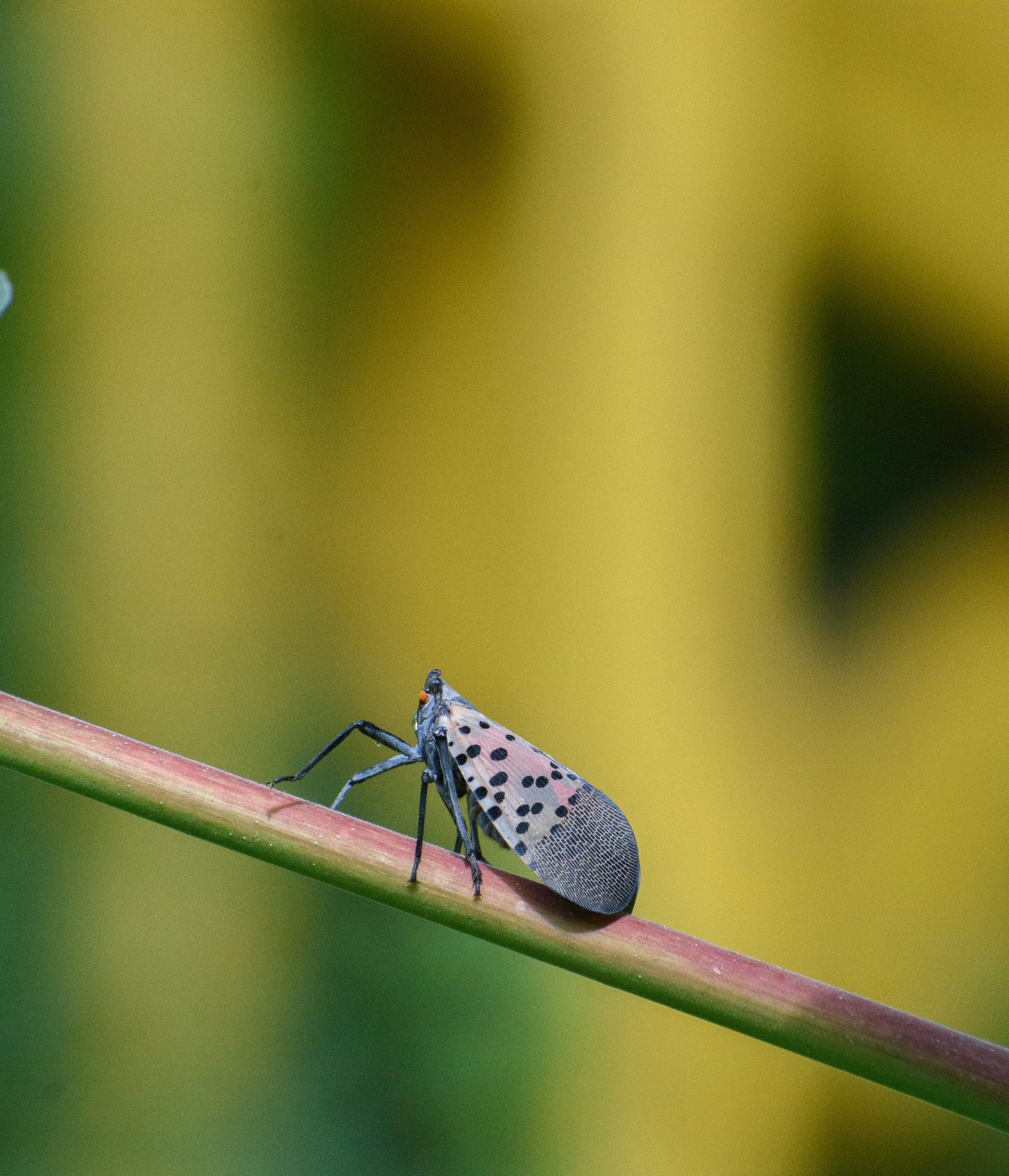
Closeup of an adult SLF, showing the body and left wing.
Adult spotted lanternfly, Rebekka Horn, University of Tennessee
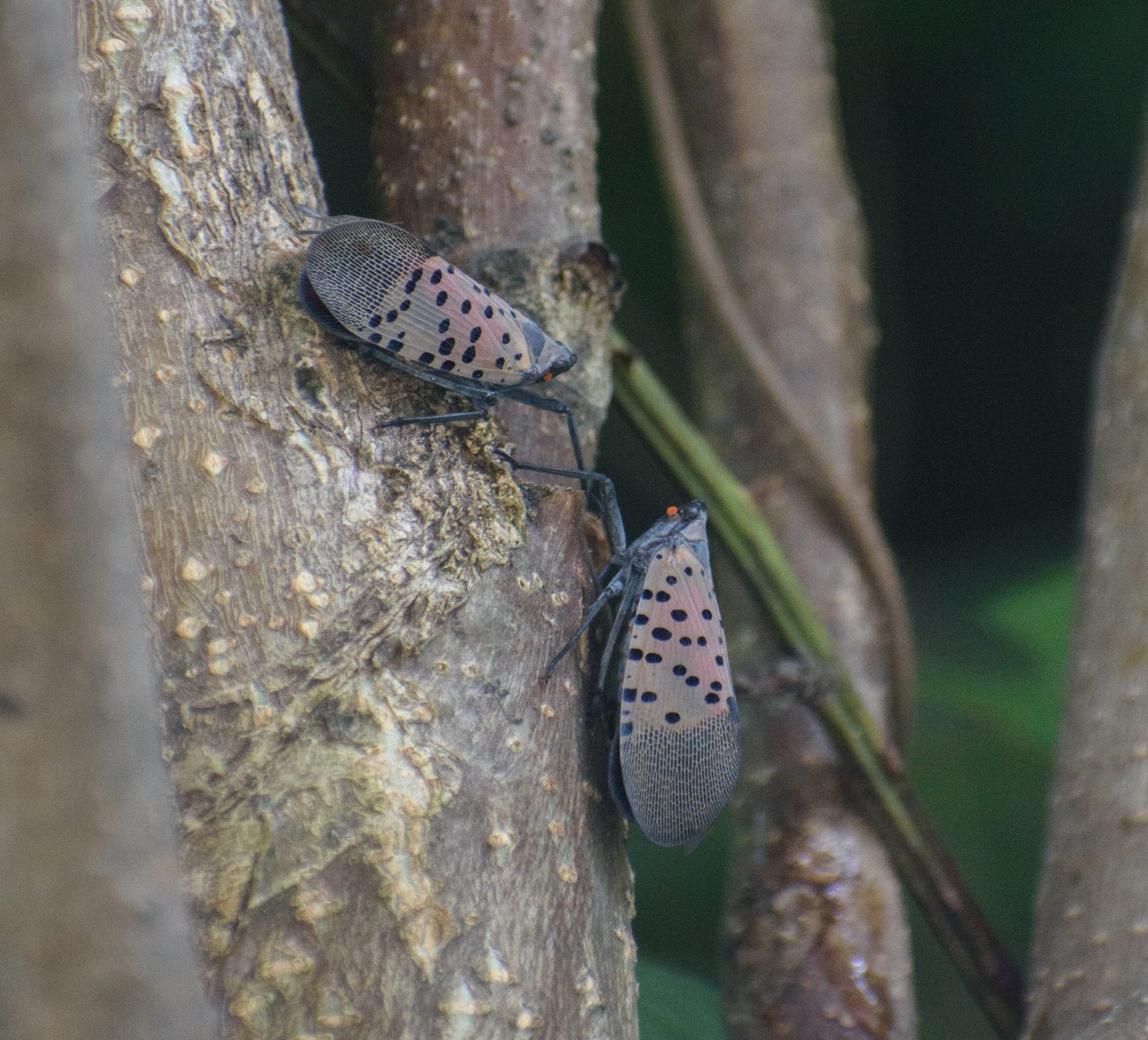
Two adult spotted lanternflies on a tree.
Adult spotted lanternflies, Rebekka Horn, University of Tennessee

Adults emerge in September, mate, and begin laying eggs September through December.

SLF adults have tan front wings with black spots and red hind wings with black bars and spots. Female SLF are larger than males, and are identified by the red area on the tip of the abdomen.

Adults and nymphs secrete honeydew (a sugary substance), which encourages the growth of sooty mold.
In turn, sooty mold can weaken parts of the tree it grows on.

Meet the Team

Loading